When Remote Work Lost the Office — And How We Get It Back
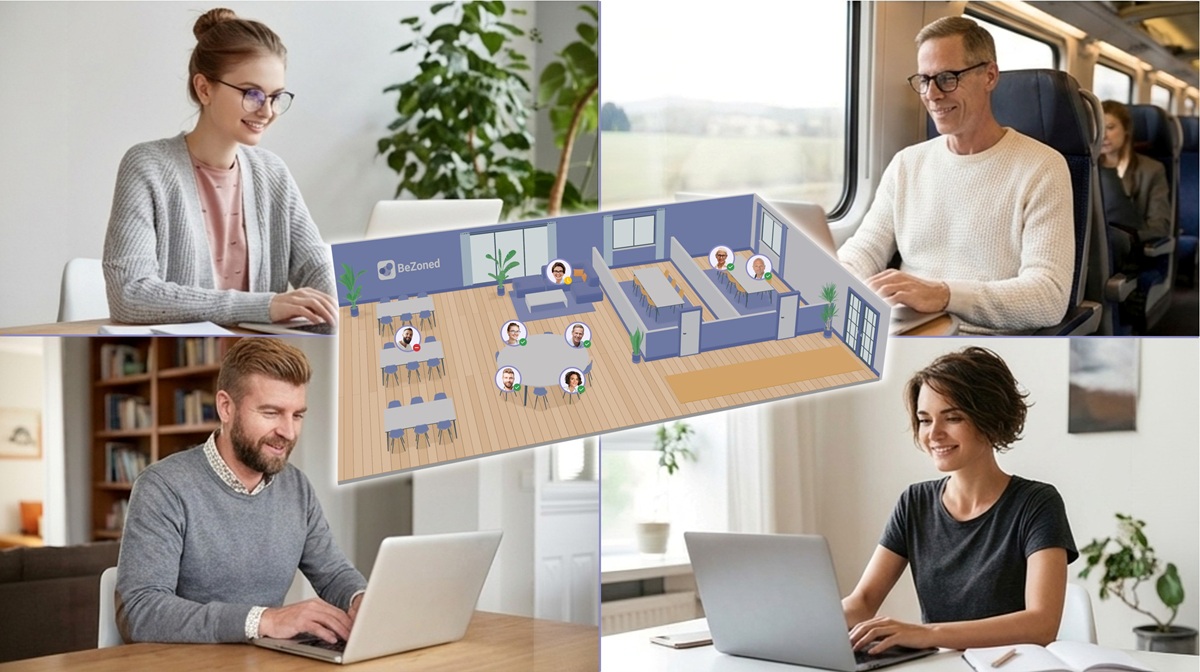
The emergence of remote work offered employees flexibility. Work could happen from home, from a company office, or while traveling. Organizations could rethink how teams collaborate and where work takes place.
But something important quietly disappeared.
When teams stopped sharing a physical workplace, the everyday interactions that once supported collaboration began to fade. The quick questions across a desk. The spontaneous conversations after a meeting. The simple awareness of who is around and available.
These moments were never part of a formal workflow, yet they played a critical role in how teams stayed aligned and connected.
When work moved online, many of those moments vanished.
When messaging replaces conversation
For many organizations, remote work has gradually shifted communication patterns.
Messaging platforms became the primary way to reach colleagues. Chat channels filled up with notifications, and what used to be a quick question often turned into a message followed by a wait for a response.
Meetings replaced spontaneity.
Instead of walking over to a colleague, employees scheduled calls for conversations that previously took minutes. Over time, this created a subtle but real challenge: alignment became harder.
Teams began to drift apart. Visibility into who is available dropped. Managers spent more time coordinating and checking in to keep everyone connected.
The flexibility of hybrid and remote work remains valuable. But leaders are increasingly asking a new question: how do we recreate the feeling of working together when people are not in the same place?
What remote teams actually need
The answer isn’t more messages, and it isn’t more meetings. What distributed teams really need is presence.
In a physical office, presence creates awareness. You can see who is working, who is available, and who might be open for a quick question. This shared visibility makes collaboration feel natural and effortless.
Without that sense of presence, work becomes fragmented and overly structured.
For remote teams to function smoothly, they need more than communication tools. They need a shared place where work happens.
How can you work remotely and still be together in the office?
This is where BeZoned comes in.
BeZoned creates an online office inside Microsoft Teams where employees share a common workspace throughout the day.
Whether people are working from home, from a company location, or while traveling, everyone can see who is present and available in real time. That visibility mirrors what naturally happens in a physical office — you can quickly see who is around, who is busy, and who might be available for a quick question.
By creating a shared online workspace, BeZoned supports spontaneous interaction. Conversations become easier and more natural because they don’t require formal scheduling or lengthy chat threads.
These everyday interactions are more important than they may appear. Collaboration, trust, and alignment are often built through small, frequent exchanges throughout the day rather than during formal meetings only.
For people managers, this approach also changes how remote teams are managed. Instead of relying on constant check-ins or heavy scheduling, teams remain aligned simply by sharing the same workspace — it’s just like working under the same roof.
Because BeZoned is built directly on Microsoft Teams, employees work in an environment they already know. This familiarity helps organizations avoid adding yet another platform to their digital workplace while still improving collaboration and visibility.
Remote and hybrid work are here to stay. The challenge for leaders is no longer choosing between office and remote work but recreating the best parts of the office experience in a digital world.
The office was never just a building; it was a shared place where work happened, and people truly collaborated.
BeZoned brings that shared experience back — wherever people work from.
Learn more about the BeZoned solution here.
Author: Thomas Kolenda