Flexibility Changes Where We Work - But Not Our Need for Each Other
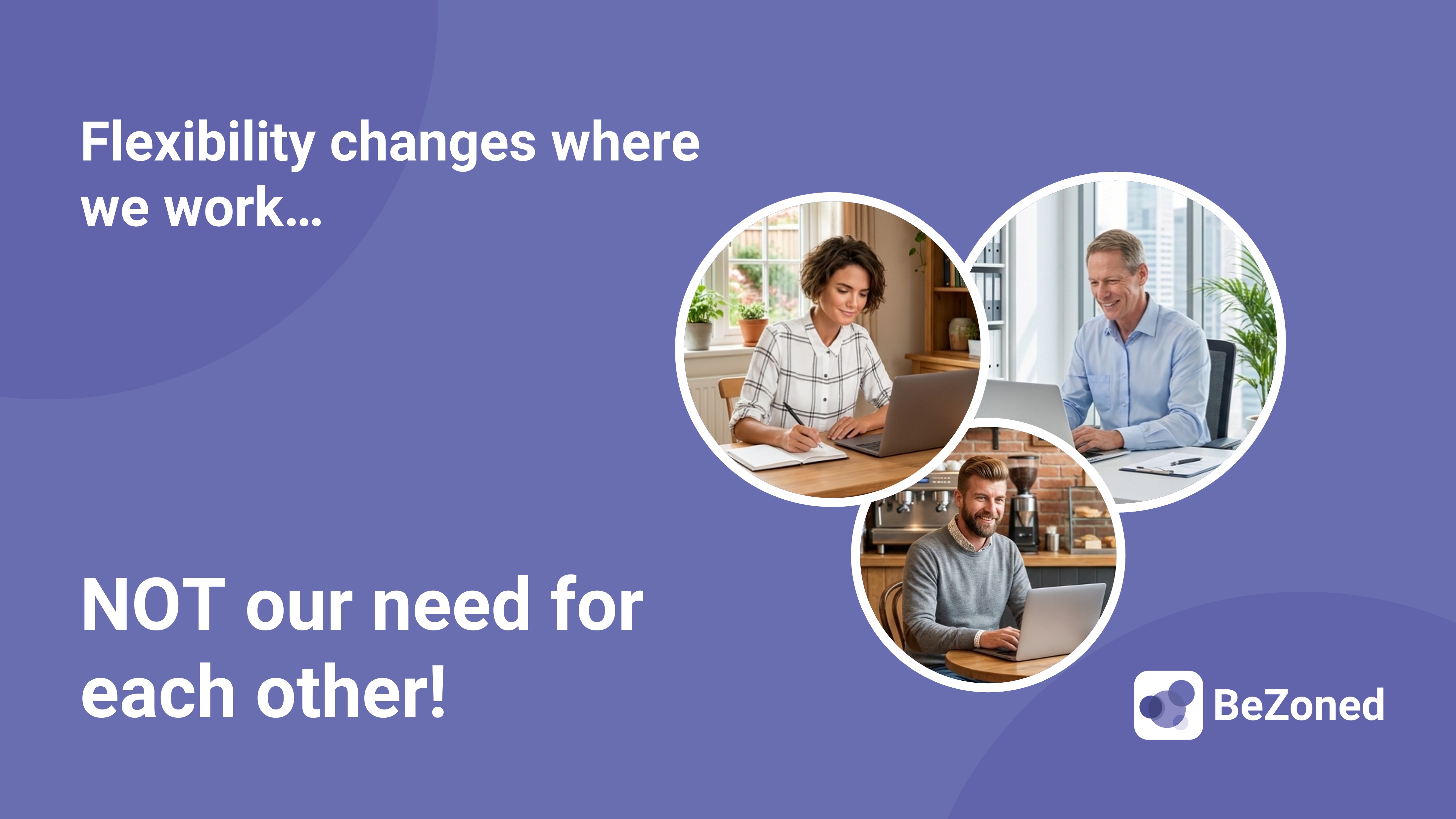
Remote and hybrid work have given us new ways to shape the working day. We can work from home, from different offices, and across cities, countries and time zones - and still get things done together.
It is a flexibility that many employees value and one that gives companies the opportunity to rethink the workplace.
But no matter where we work, one thing does not change. We still need our colleagues.
We need to be able to ask a quick question. Bounce around an idea. Get help when we are stuck. Learn from each other. And sometimes simply talk without having an agenda.
That is why I believe the conversation about hybrid work should also include what happens between meetings.
A meeting is only one part of the working day
We have become very good at meeting digitally. When something needs to be discussed, presented or decided, we can come together online in seconds.
But think about an ordinary day in a physical office.
Not all valuable interactions happen in a meeting room. We see who is around. We ask a colleague a quick question across the desk. We notice that someone has two minutes to help. We overhear a conversation that turns out to be relevant to our own work.
And then there is lunch, the coffee break and the small conversations that may not directly complete a task but help us get to know the people we work with.
In a remote or hybrid working day, we need to create some of those same opportunities in a different way.
When the primary contact between colleagues takes place through scheduled video meetings, much of what would normally happen spontaneously becomes something we actively have to initiate. A quick question becomes a message. A short conversation might turn into a meeting. And the informal chat becomes easier to skip altogether.
This is where the online office comes in
An online office is not meant to replace video meetings or the physical office. It creates a shared digital space for colleagues, whether a company works fully remotely, has a hybrid setup, or has employees distributed across multiple locations.
BeZoned was built with exactly this in mind. Here, employees can see which colleagues are around and available, reach out directly and be part of the same working environment even when they are physically in different places.
It may sound like a small difference, but it changes the starting point for hybrid collaboration.
Instead of only being connected when the calendar says it is time to meet, we can also be available to each other throughout the working day.
This creates better opportunities for quick sparring, informal knowledge sharing and spontaneous conversations – some of the qualities of the physical office that BeZoned brings into the digital working day.
Visibility should work both ways
For me, this is particularly interesting from a leadership perspective. For a leader who cares about their team, remote and hybrid leadership is about more than getting the work done. It is about creating an environment where employees can thrive, feel part of a community and have easy access to both their colleagues and their leader. Including on the days when everyone is working apart. Being a thoughtful leader is therefore also about creating a sense of closeness and the right conditions for employees to stay connected to one another.
When employees work from different places, good visibility is about making sure people still have access to each other.
Can an employee see when a colleague is available? Can a new employee find someone to ask? Is the leader easy to reach? And does the team have opportunities to spend time together without always having to put another meeting in the calendar?
In an online office, visibility works both ways. The leader is part of the same space as the employees – not someone standing outside looking in.
It reflects a different way of thinking about remote and hybrid leadership: Flexibility does not require more control. It requires the right conditions for the team.
Creating a workplace – wherever we work
Remote and hybrid work give us the opportunity to rethink the workplace. But flexibility does not have to mean giving up the things we value about working together.
Spontaneous sparring. Knowledge sharing. Relationships. Accessibility. The feeling of being part of a team.
We have already learned how to meet online.
The interesting next step is creating a workplace where we can also be colleagues online.